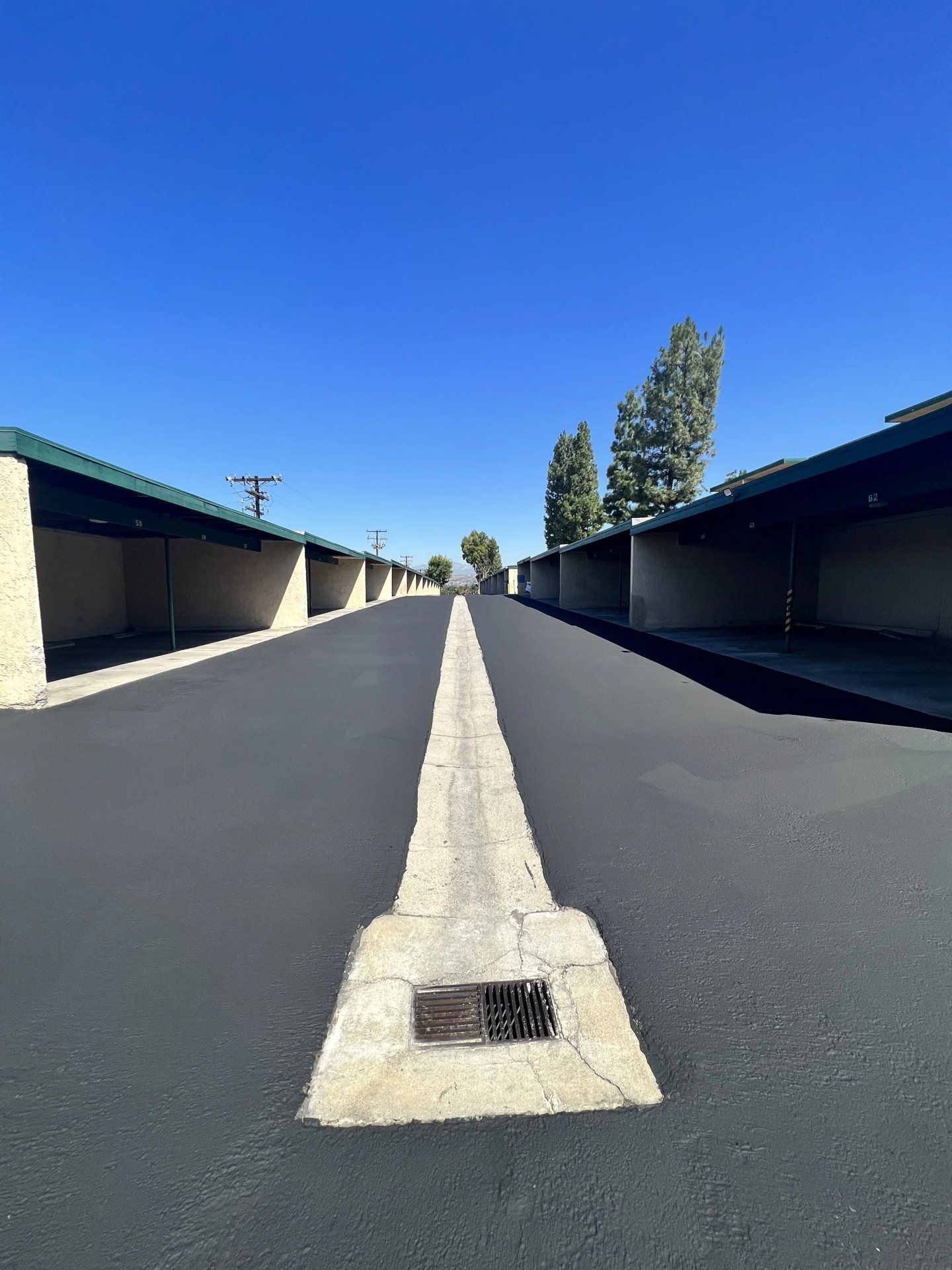
Commercial asphalt is one of the largest capital assets on a property. For HOAs, retail centers, office parks, and industrial complexes, a well-maintained parking lot protects property value, reduces liability, and keeps tenants happy. The good news: most asphalt failures are preventable with a simple, scheduled maintenance plan.
This guide covers the full lifecycle of commercial pavement, the maintenance tasks that matter most, and how Southern California's climate affects your schedule.
In this guide
The lifecycle of commercial pavement
Commercial asphalt doesn't fail overnight. It goes through predictable stages, and each stage has a cost-effective treatment. The key is matching the repair to the stage — not waiting until a small crack becomes a base failure.
Years 0–5
New or recently resurfaced pavement
- Annual visual inspection for early cracks
- Seal coat at year 2–3 to protect against oxidation
- Keep drains and catch basins clear
- Restripe as needed for safety and ADA compliance
Years 5–10
Early aging and surface wear
- Crack sealing every 1–2 years before water enters
- Second seal coat application
- Localized patching for small potholes and failed areas
- Review drainage and low spots that hold water
Years 10–15
Mid-life rehabilitation
- Mill and overlay in sections showing widespread cracking
- Full-depth repair where base has failed
- Update ADA stalls, ramps, and path of travel
- Plan for larger capital expenditure in next 5 years
Years 15+
End of useful life
- Pavement condition assessment with core samples if needed
- Budget for full-depth removal and replacement
- Phase work to minimize tenant disruption
- Consider complete redesign for drainage or traffic changes
Recommended maintenance schedule
Use this schedule as a starting point. Properties with heavy truck traffic, high sun exposure, or poor drainage will need more frequent attention.
| Task | Frequency | Why it matters |
|---|---|---|
| Visual inspection | Annually (spring) | Catch cracks, drainage issues, and trip hazards early. |
| Crack sealing | Every 1–2 years | Stops water from reaching the base and causing potholes. |
| Seal coating | Every 2–3 years | Protects against UV, oil, and oxidation; restores appearance. |
| Pothole patching | As needed | Prevents liability claims and further base damage. |
| Restriping | Every 1–2 years | Maintains safety, traffic flow, and ADA compliance. |
| Catch basin / drainage | Annually | Standing water is the fastest way to destroy asphalt. |
How Southern California climate affects asphalt
Southern California's hot, dry summers and intense UV exposure accelerate asphalt oxidation. Oxidized asphalt becomes brittle, gray, and prone to cracking. While freeze-thaw damage is rare here, the sun does the same long-term damage in a different way.
- UV exposure dries out the asphalt binder, leading to surface raveling and cracks.
- Infrequent rain means cracks stay open longer, but when rain does come, it penetrates deep before you notice damage.
- Heavy Santa Ana winds blow dust and debris into drains, increasing standing water risk.
- High daytime temperatures soften asphalt; heavy vehicles cause rutting in older or thin pavement.
The right seal coat formula for Southern California properties balances UV resistance with quick cure times so your lot reopens fast.
Budgeting and planning for property managers
The most expensive paving decision is doing nothing. A preventative maintenance program costs a fraction of major rehabilitation. Here's how smart property managers plan:
Set a reserve line item
Allocate funds every year for crack sealing, seal coating, and restriping so small repairs don't become emergency capital projects.
Inspect before budget season
Get a professional pavement assessment in Q1 or Q2 so your annual budget reflects actual conditions, not guesses.
Phase large projects
Split overlays or replacements into sections over multiple years to spread cost and minimize tenant disruption.
Track warranty periods
Know when your last seal coat, overlay, or repair was completed so you don't over- or under-maintain.
Frequently asked questions
Related services
Put this guide into action with the right service for your property's stage.